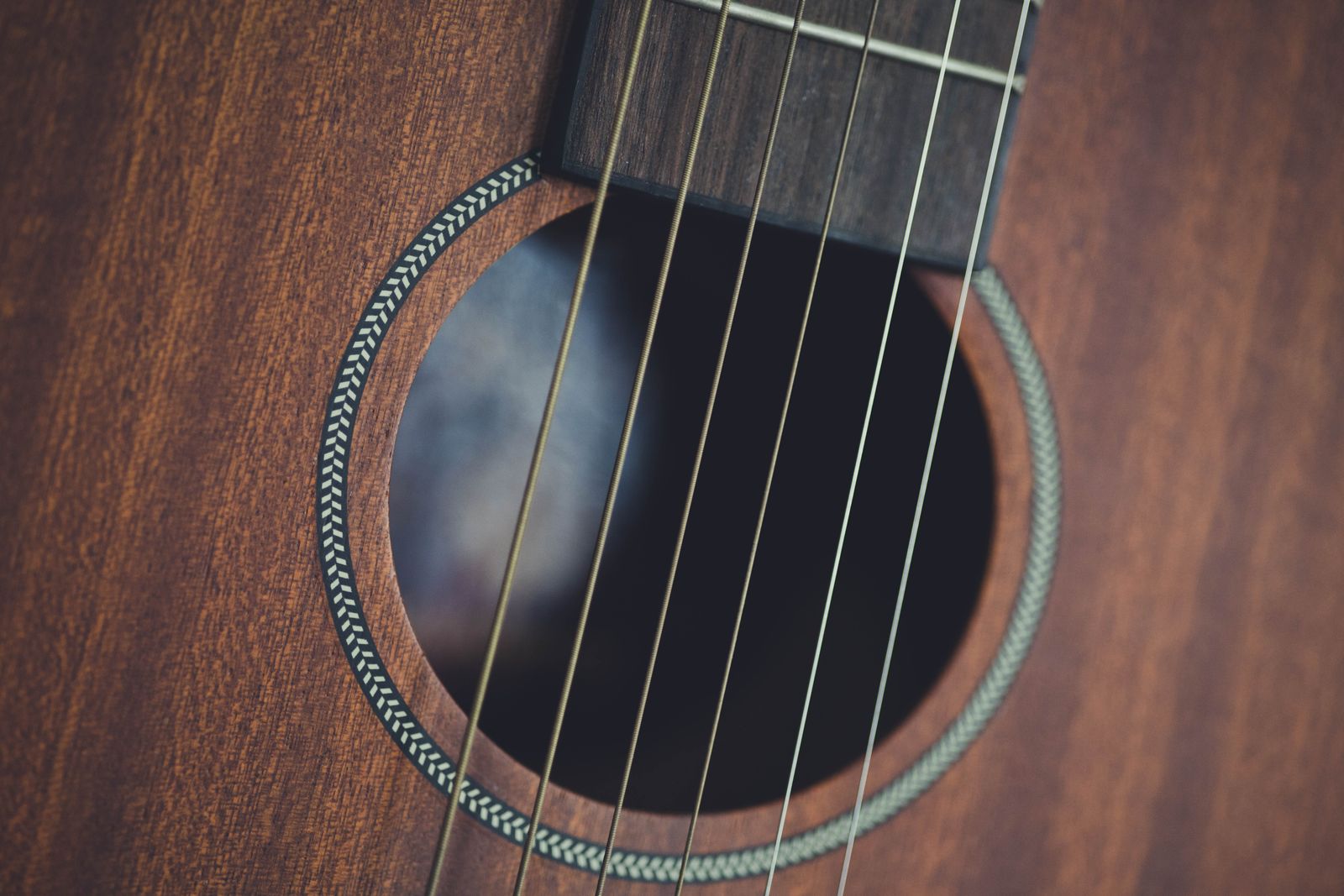
Two acoustics hang side by side in the shop. One is $200, the other $500, and the wood on the front looks near enough identical. The difference is usually one line on the spec sheet: whether that front is solid wood or a laminate, and it is the single spec worth reading before any other.
What the top actually does
An acoustic guitar makes almost no sound from the strings themselves. The strings drive the bridge, the bridge drives the top, and the top moves air. Everything else on the instrument exists to hold those parts in the right relationship to each other.
A solid top is one piece of wood, usually two book-matched halves glued at the center seam, and it flexes as a single sheet. A laminate top is a thin cosmetic veneer glued over cheaper plies, with the grain of each layer turned against its neighbor. That cross-grain construction is exactly what makes plywood stiff and stable, which is a virtue in a floorboard and a problem in a speaker cone.
The audible result is not that laminate sounds bad. It is that it sounds the same forever. A solid top loosens as the resins in the wood cure and it gets played, so the guitar you buy at twenty is not quite the guitar you own at forty. A laminate top is finished developing the day it leaves the factory.
How to tell, in the shop, in ten seconds
Do not trust the sticker. Look into the soundhole and study the exposed edge of the top itself:
- Solid: the grain lines you see on the outside face run straight down through the cut edge and carry on to the inside. It is one continuous piece of wood, top to bottom.
- Laminate: you will see a distinct stripe near the outer face, a hairline of dark glue, or a sudden switch to a different, blander wood underneath. The pretty grain stops after a fraction of a millimeter.
- Hidden by binding: some guitars trim the soundhole edge so you cannot see. Ask, and if nobody knows, assume laminate. Solid tops are a selling point and manufacturers advertise them.
The back and sides matter much less than the price suggests
This is where the money goes once the top is solid, and where the returns fall off hardest. The back and sides are mostly a reflective box. They color the sound, but they are not the thing generating it.
Which is why the sensible budget buy is a solid top over laminate back and sides, and why that combination dominates the entry-level market. The Yamaha FG800 is the obvious reference point: a solid Sitka spruce top over nato back and sides, at a price where most of its rivals are laminate all the way round. It is the cheapest way to buy the part of the guitar that actually does the work.
Laminate back and sides also bring a genuine advantage that nobody advertises, because “less fragile” is a poor headline. Plies barely care about humidity. An all-solid guitar in an apartment that swings from dry radiator heat in February to damp August air will move, and a badly-dried one can crack. If the instrument is going to live on a stand in a room you do not control, or ride in a car trunk to gigs, the laminate box is the practical choice rather than the compromise.
Spruce or cedar is a question about your right hand
Once you are choosing between solid tops, the species is a real decision and not a marketing one.
Spruce is stiffer for its weight. It has more headroom, meaning it keeps getting louder the harder you hit it, and it is the reason strummed dreadnoughts are almost always spruce. It also takes the longest to open up.
Cedar is softer and lighter. It responds to a gentler attack, which fingerstyle players value, and it sounds mature out of the box because there is less curing left to do. Drive it hard with a pick and it compresses. It runs out of headroom where spruce would keep climbing.
Neither is better. If you strum with a pick, buy spruce. If you play with your fingers and want the guitar to sound good now rather than in 2040, cedar is the more honest purchase.
The order to spend in
Solid top first. Then a setup, which costs a fraction of the next guitar up and changes more about how the instrument plays than any wood does. Then, if there is money left, worry about the back and sides.
A well-set-up solid-top guitar with a plywood box will out-play a badly-set-up all-solid one every time, and it will do it for a third of the money.