I’ve owned four looper pedals, sold two, and still use the other two mostly for practice. The gap between what beginners expect a looper to do and what it actually does is where most lose money and patience. Here are the things I wish someone had told me before I bought my first one.
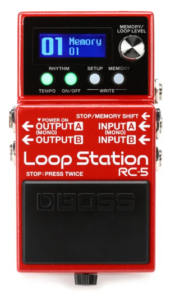 The first thing: buy simple before you buy powerful. There are very complicated looper pedals and there are easy to use loopers. There’s a reason the Boss RC-5 keeps showing up at the top of those lists. One reviewer called it the best all-rounder, saying “Out of all the loopers I tried, the RC-5 came out as the best all-rounder”, and another site put it plainly:
“For most players, the best looper pedal overall will be the Boss RC-5, which offers compact looping, high-quality audio, and plenty of features”. But “plenty of features” is exactly what trips up someone using a looper for the first time.
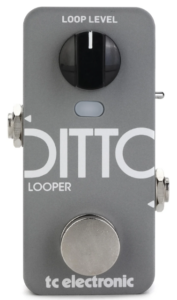
If you’ve never looped before, spend a few weeks on something dead simple like the TC Electronic Ditto before you touch anything with multiple tracks and MIDI sync.The Ditto 2 is very reasonably priced, at around the $100 mark at most retailers, and it does exactly one thing: record, overdub, stop, with a single footswitch. Learning to loop cleanly is a timing skill, not a menu-navigation skill, and a one-button pedal forces you to develop that timing instead of hiding behind undo buttons and quantize settings.
Second: the loop point matters more than the loop length. Nobody tells beginners this, but where you start and stop your loop is the whole ballgame. Tap the switch a sixteenth note early or late and the whole thing drifts, and once it’s drifting, every overdub drifts with it. I spent a solid month of kitchen-table practice just tapping loops on and off along with a metronome before I ever tried it through an amp at volume, and that month mattered more than anything the manual explained.
Third: know what you’re actually looping into. A looper records whatever hits it, which means noise, hum, and any pedal drift on your board gets frozen into the loop and repeated forever. Put the looper near the end of your chain, after your dirt and modulation, or you’ll loop garbage. And check true bypass. Cheaper units often aren’t, which adds tone-sucking buffer noise to a loop you can’t undo.
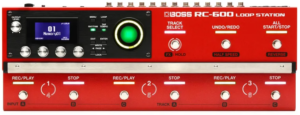 Fourth: storage and stereo output only matter if you actually need them. Live players chasing layered ambient textures might want something like the Boss RC-600, since experienced live players should look at the Boss RC-600 if they want to unlock the full power and potential of live looping. But if you’re just working on song structure or practicing solos over a rhythm part, that horsepower is wasted, and it’s one more menu to get lost in during a set.
Last thing: a looper won’t make you a better player, it’ll expose exactly what you’re not yet good at. That’s the actual value. Use it that way.
Start with the TC Electronic Ditto. It’s affordable, it forces you to develop real timing discipline, and once you understand the fundamentals on something that simple, you’ll actually know what features you need in something more powerful. Skip the hype and learn the basics first.