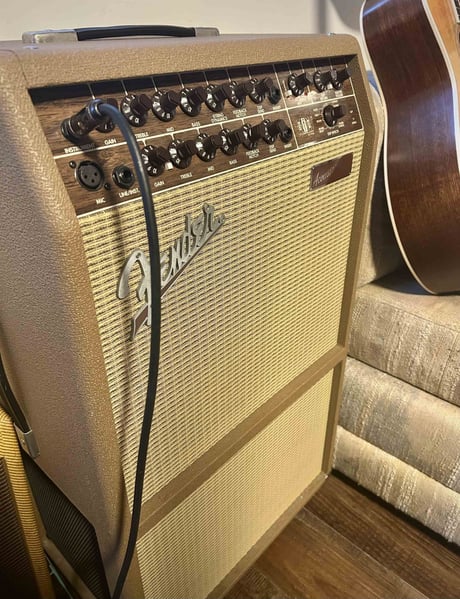
I’ve had a Fender Acoustasonic SFX PR370 sitting in my basement for going on fifteen years now, the brown tolex kind with the side-firing cabinet, and I still get asked about it more than almost any piece of gear I own. So it’s worth actually talking through what it was, why it worked the way it did, and whether you should chase one down used or just buy something new.
Fender built the PR370 as part of the original Acoustasonic line, and Reverb’s own listings date the model to roughly 1999 through 2003, which lines up with when I bought mine secondhand from a guy who was moving to a smaller apartment and didn’t want to deal with hauling it anymore. It’s not a small amp. It’s a 160-watt (2 x 80W) stereo acoustic guitar combo amplifier, and the design trick that made it interesting is right there in the name. SFX stands for Stereo Field Expansion, and it works by driving 80 watts of power into a 6.5-inch speaker and a side-mounted tweeter arranged so the sound spreads out across the room instead of shooting straight forward like a normal combo. Other listings describe the layout as multiple speakers, typically an 8-inch and 10-inch with a piezo horn, to project a wide, room-filling sound ideal for solo performers.
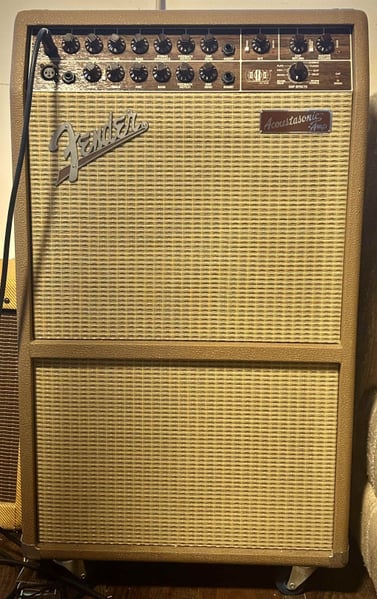
That’s the vintage approach: a box built specifically to solve the problem acoustic players actually have on stage, which is a piezo pickup that sounds thin and quacky through a regular guitar cabinet, and feedback that starts howling the second you turn up past bar-conversation volume. The PR370 addressed both directly. It has 80 watts per channel for 160 total wattage, 10-inch and 8-inch woofers with a piezo horn for added top-end clarity, and String Dynamics and Feedback Notch controls for sweetening acoustic sound. It also had an XLR input on the second channel, so you could run a vocal mic through it and use it as a genuine one-box solution for a coffeehouse gig, no PA required. I did exactly that for years. It fills the room with a rich sound digital equipment hopes to duplicate.
The honest tradeoff is weight and repairability. That amp is heavy, the DSP board is old, and Fender stopped making it a long time ago. It’s a discontinued model, but it remains a highly regarded stage amp that is regularly bought and sold on the pre-owned market, which tells you two things: people still want that specific sound, and you’re on your own for parts if the effects chip dies.
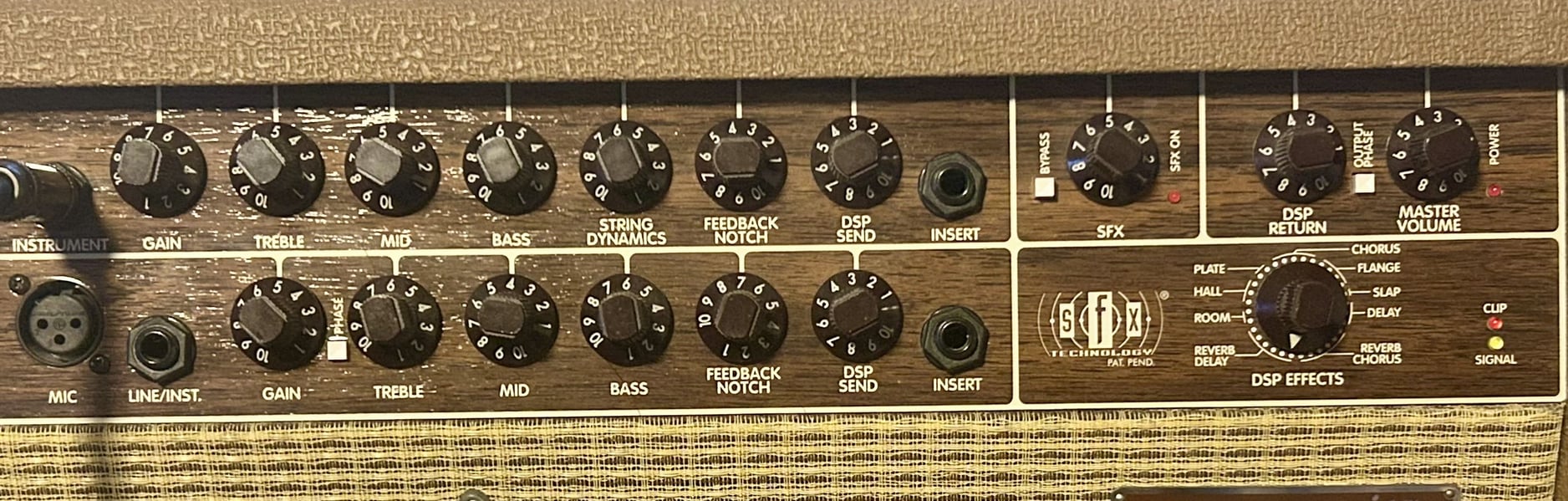
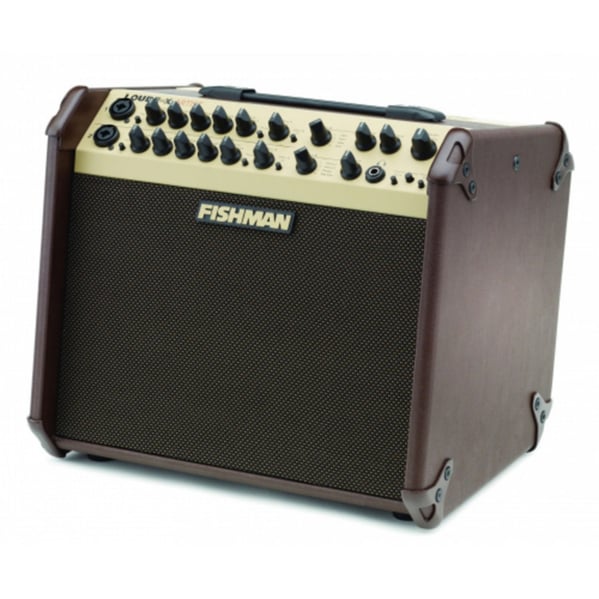
A modern single-cone combo like a Fishman Loudbox or a current Fender Acoustasonic Junior gets you cleaner, lighter, more reliable gear with a built-in DI. New models include a phone-in jack you’ll actually use for backing tracks. What it won’t give you is that side-firing spread that makes a solo act sound like it’s filling a room by itself.
Take the Fishman Loudbox Performer as the clearest modern comparison. It runs 180 watts through an 8-inch woofer and horn per channel, with a built-in effects section and phantom power on the mic channel for a condenser if you want one, and it weighs a fraction of what the PR370 does. That’s a real advantage for a guy hauling gear up a flight of stairs to a wine bar three nights a week. But a single-cone front-firing cabinet still throws sound the way a guitar amp throws sound, in a beam out toward the front rows, so the back of a deep room can feel thin even when the front is plenty loud. The PR370’s side-firing tweeter was solving a problem the Loudbox Performer doesn’t fully address, it just does everything else better.
The column-array route splits the difference in a different way. A Fishman SA330x or a Bose column system breaks the sound into a slim vertical array of small drivers plus a separate low-end box, and that shape naturally spreads coverage across a wide, shallow room without the harsh beaming of a single 10-inch cone. The tradeoff there is bottom end. Most of these systems lean on a compact powered sub to fill in what the skinny array can’t move, so you’re carrying two pieces instead of one, and outdoors, without walls to reflect off of, that spread advantage shrinks and you’ll notice the low end thinning out faster than it would indoors.
If you play solo cafe gigs where you’re the whole show, hunt down a PR370 for great vintage sound. Or, consider the next level of small column speaker arrays now common for weight and mixing features. If you’re in a band running through a PA, skip the vintage box entirely and buy new for the DI and the weight savings alone.